
How 3D Printing Is Helping Visitors Explore a Rare Beetle at the Lithuanian Zoo

Co-founder at AmeraLabs
Most of our everyday work revolves around developing 3D printing materials for miniatures, engineering, and dental applications. Every now and then, however, 3D printing takes us somewhere completely different.
This time, it took us into entomology.
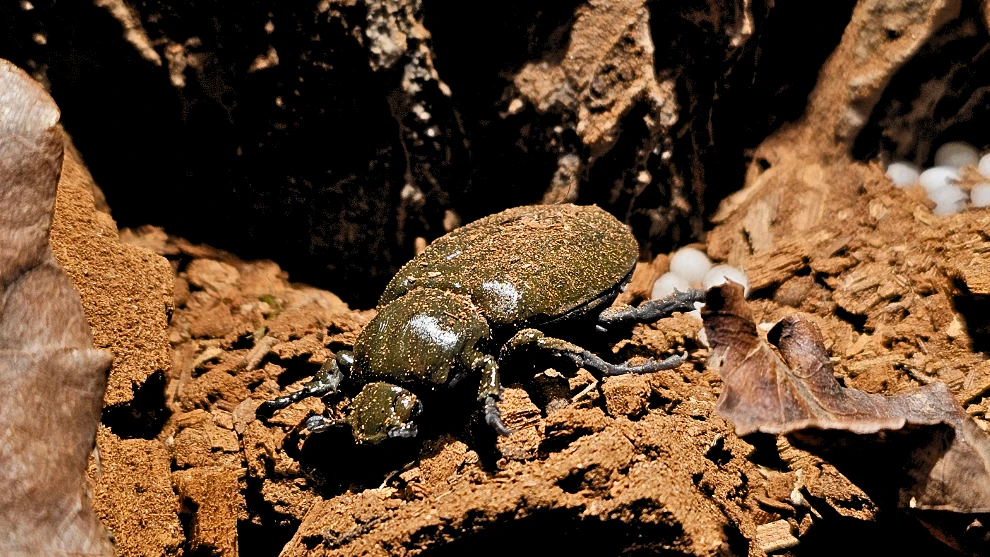
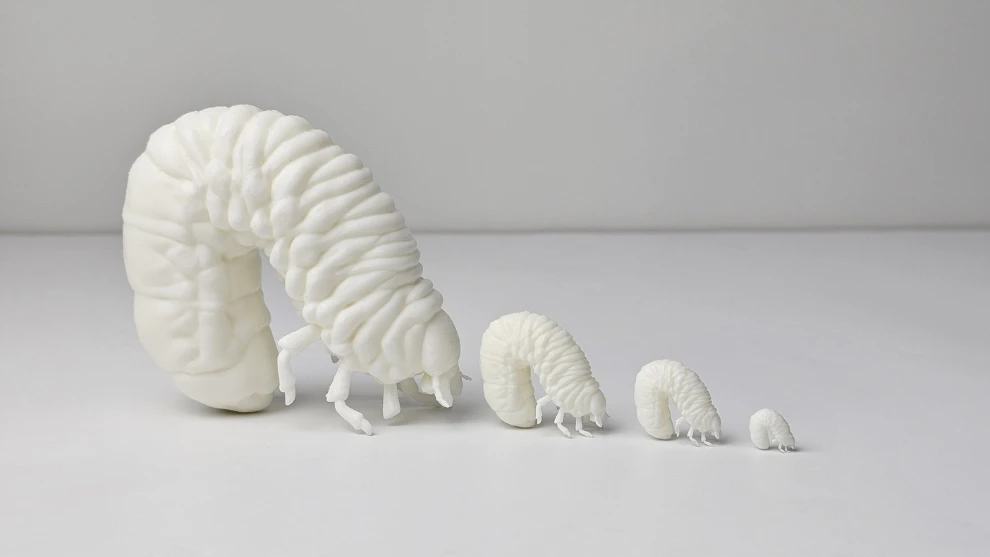
Together with the Lithuanian Zoo, we have been working on realistic 3D printed models of the hermit beetle (Osmoderma barnabita) and different stages of its life cycle. The models are now being used in the zoo’s educational activities, where visitors can pick them up, examine them closely, and learn about a protected beetle that is not easy to observe in nature.
The project also gave us an opportunity to combine several tools we work with regularly or experiment with: digital modeling, artificial intelligence, resin 3D printing, and, of course, a fair amount of manual refinement along the way.
Meet the Hermit Beetle
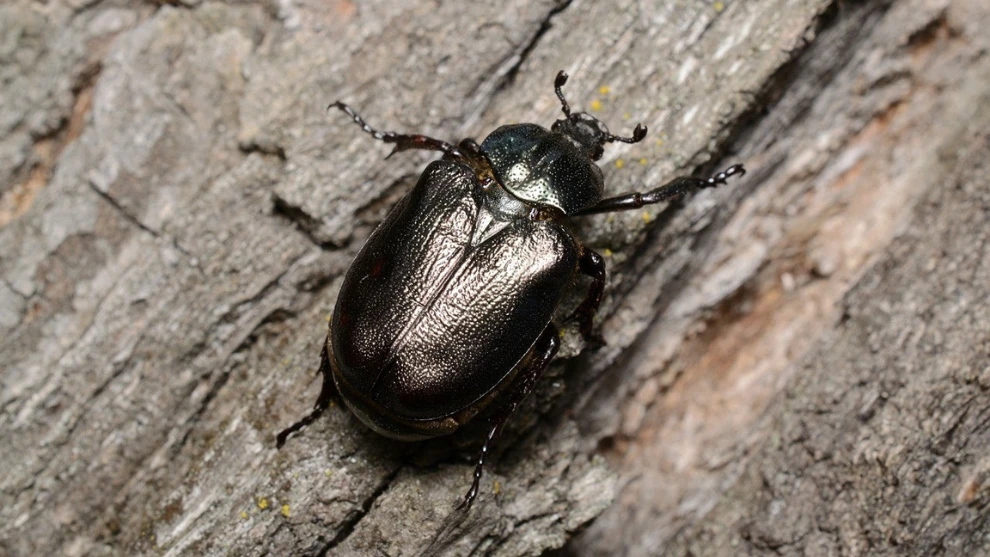
The hermit beetle (Osmoderma barnabita) is a protected species listed in the Lithuanian Red Data Book.
Adult beetles are 24–32 mm long, dark brown, and have a greenish metallic sheen. Their life cycle is closely linked to old deciduous trees, especially hollow oaks. The larvae develop for two to three years inside decaying wood, which means people rarely get an opportunity to see this stage of the beetle’s life in nature.
The species was added to the Lithuanian Red Data Book in 1989 and is currently classified as vulnerable. One of the major threats to its survival is the disappearance of old, hollow trees.
One of the largest populations of the species in Lithuania can be found in Oak Grove Park in Kaunas.
The Lithuanian Zoo, together with partners in Lithuania and Latvia, is involved in the project “LIFE Osmo Baltic. The Path of Old Oaks for the Hermit Beetle in Lithuania and Latvia.” As part of the project, the zoo also runs an ex situ breeding program, meaning that beetles are bred outside their natural habitat as part of conservation efforts.
Their offspring are later released into the wild.
Why Not Simply Show Visitors a Live Beetle?
This was one of the practical challenges behind the project. The beetles bred at the Lithuanian Zoo are part of a conservation program. They are not specimens that can simply be passed from hand to hand during an educational program.
There is another limitation: the adult stage lasts only around one to two months. The beetles spend most of their lives hidden inside old trees as larvae. That makes close observation difficult.
For educational activities, especially those involving children, there is a big difference between seeing an animal in a photograph and being able to hold a realistic model, turn it around, examine its shape, and look closely at details.
But those models also need to survive repeated use.
Models made from modeling clay and similar materials can be too fragile to withstand repeated handling by hundreds of curious visitors. The Lithuanian Zoo was therefore looking for a more durable way to represent the beetle and its different life stages.
That is where 3D printing came in.
From Beetle Photographs to a Printable 3D Model
We started with available photographs of the hermit beetle and its larvae, along with information about their anatomy.
Creating a detailed 3D model entirely from scratch would normally require a significant amount of manual modeling. To speed up the initial stage, we used AI tools, including ChatGPT and Tripo3D, a platform capable of generating 3D models from images.
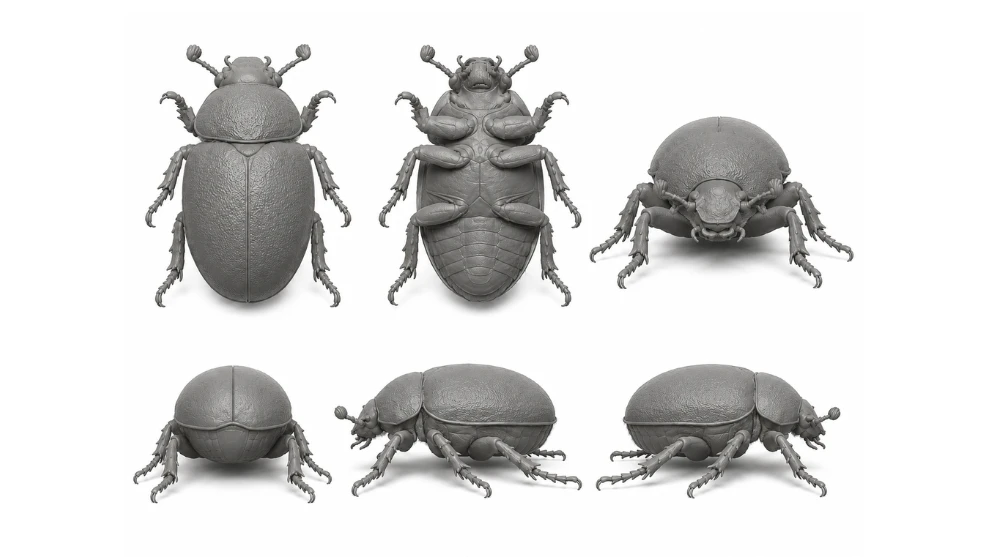
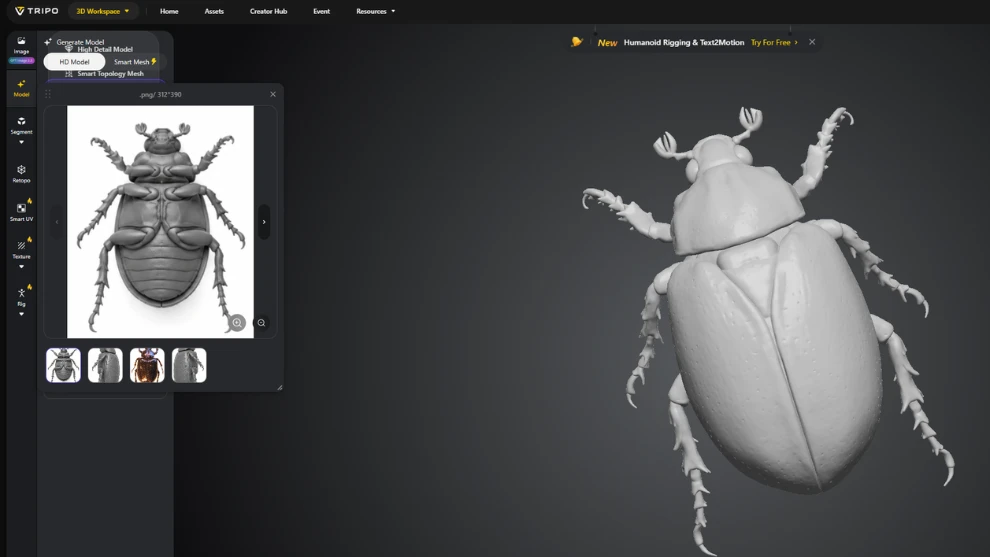
The aim was not to take an automatically generated model and send it straight to a printer. Instead, the tools helped us create initial 3D geometry more quickly. From there, the models could be reviewed, refined, and prepared for printing.
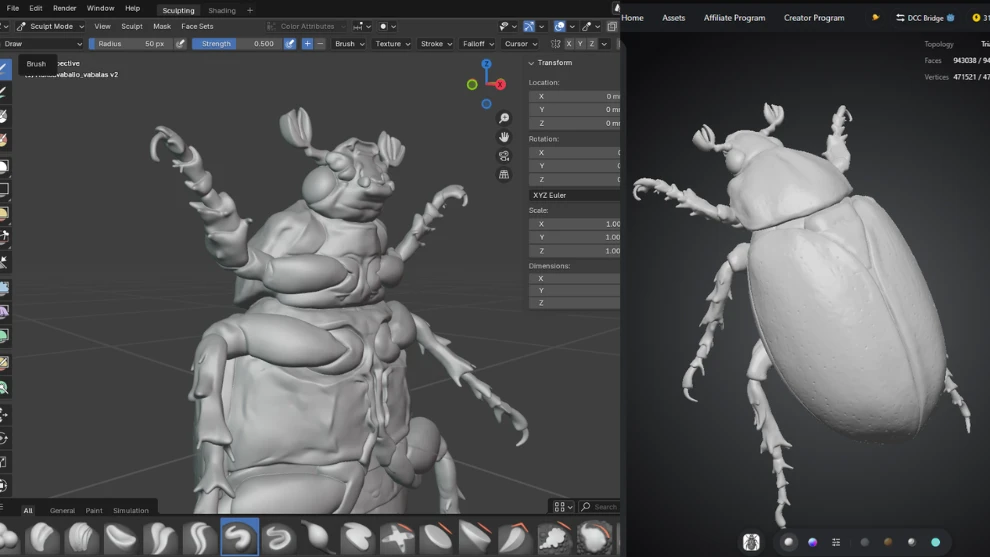
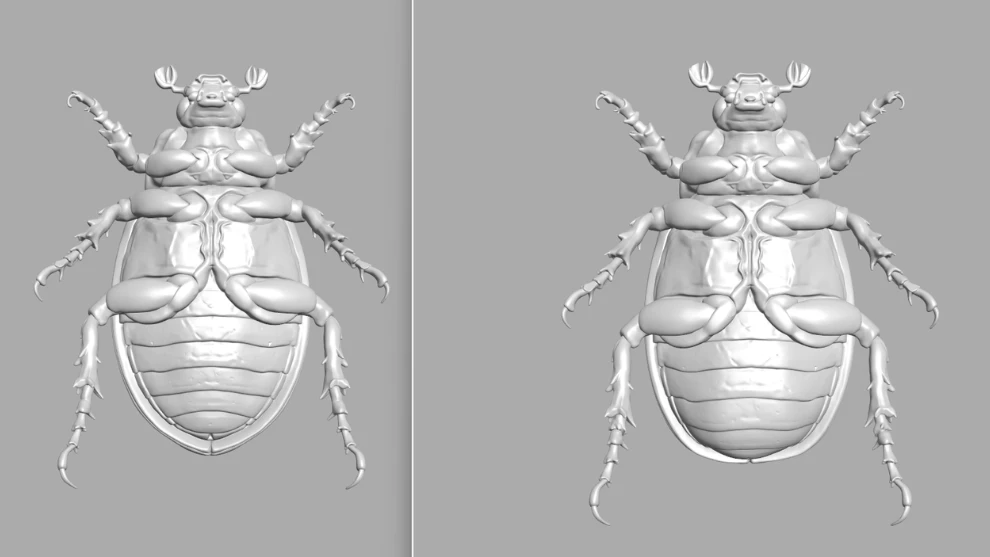
This shortened the early modeling process while still leaving an important part of the work to the team: assessing whether the digital models represented the beetle and its larvae correctly enough and correcting it where needed.
Some tradeoffs and compromises had to be made. Antennae, thin legs, and other hairlike features would be impossible to print exactly as they appear in real life, so they were made slightly thicker to make them printable.
Turning the Digital Beetle Into Something Visitors Can Hold
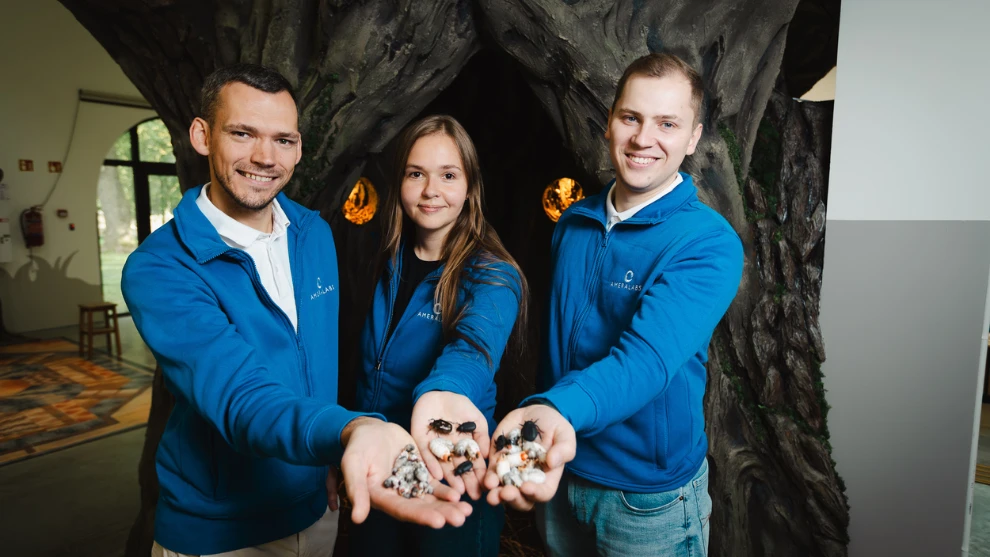
Once the digital models were ready, we 3D printed different stages of the hermit beetle’s life cycle using TGM-7 and XVN-50 resins developed by AmeraLabs. The models were printed on an Elegoo Saturn 4 Ultra, Uniformation GK3 Ultra, and Phrozen Sonic Mini 8K at a 50 µm layer height.
Durability was especially important for this project. Thin legs and other delicate features printed with a more brittle standard resin would have little chance of staying intact when handled repeatedly by children. That is why we used durable AmeraLabs 3D printing resins that could better withstand regular handling.
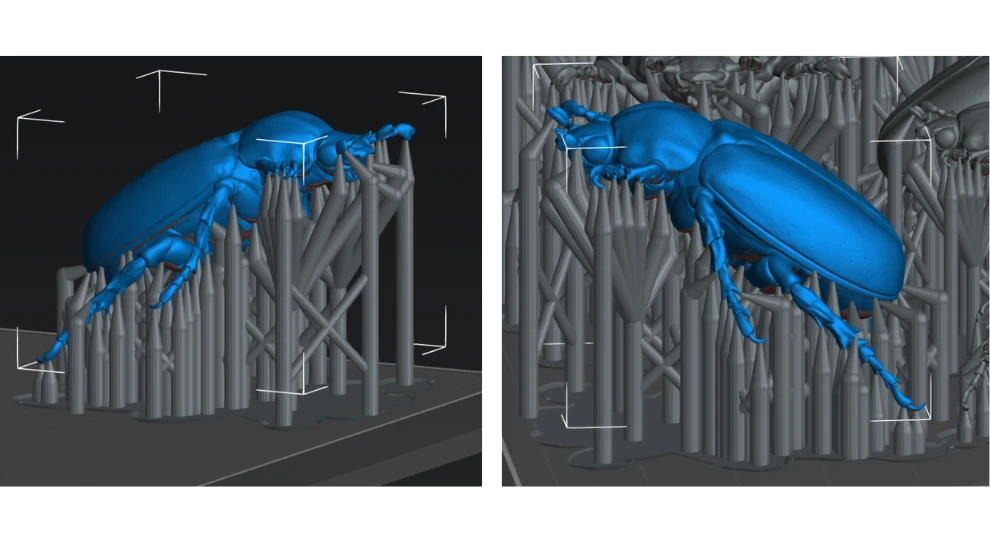
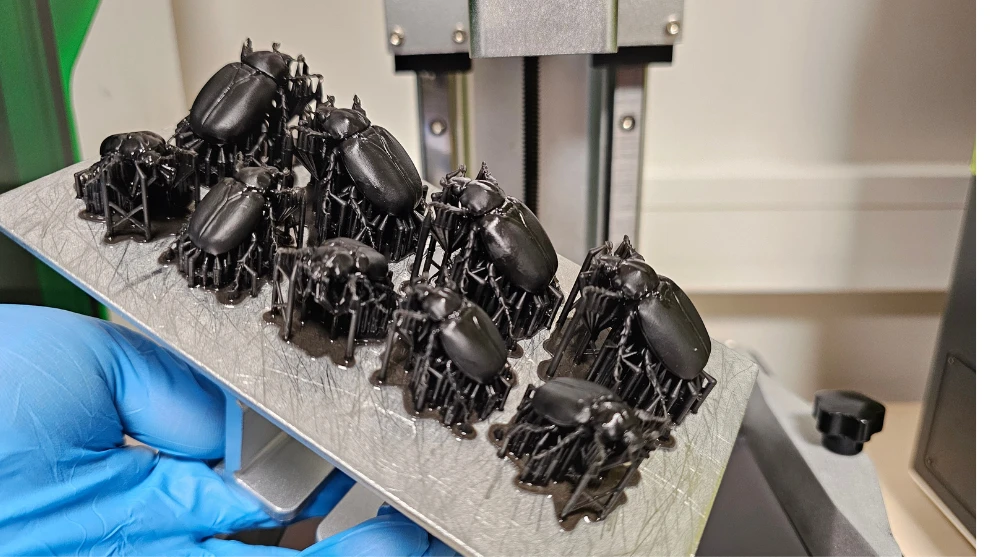
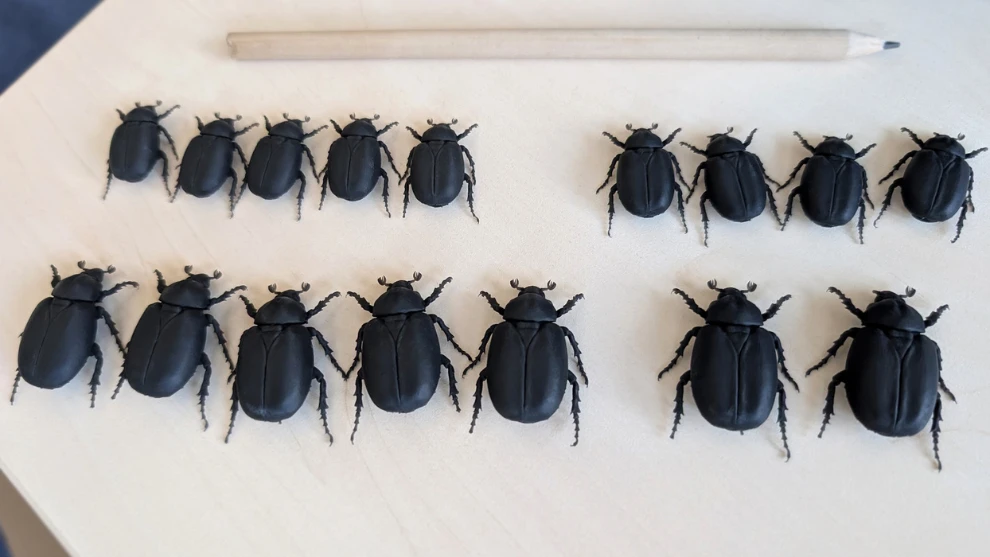
That changed the model from something visible only on a screen into a physical teaching tool. Visitors can now hold the models, examine them from different angles, look at details up close, and explore life stages that would otherwise be very difficult to observe directly.
For us, this was a fun and interesting application of a technology we normally work with in different contexts. The same basic process used to produce a miniature, an engineering prototype, or another detailed resin part could be adapted to create a durable educational object.
Recreating a Life Mostly Hidden Inside Old Trees
One of the first results of the collaboration became part of the Lithuanian Zoo’s educational experience dedicated to the hermit beetle.
A hollow tree stump model was created with beetle larvae inside. Visitors can look for and count the larvae while learning where and how they develop.
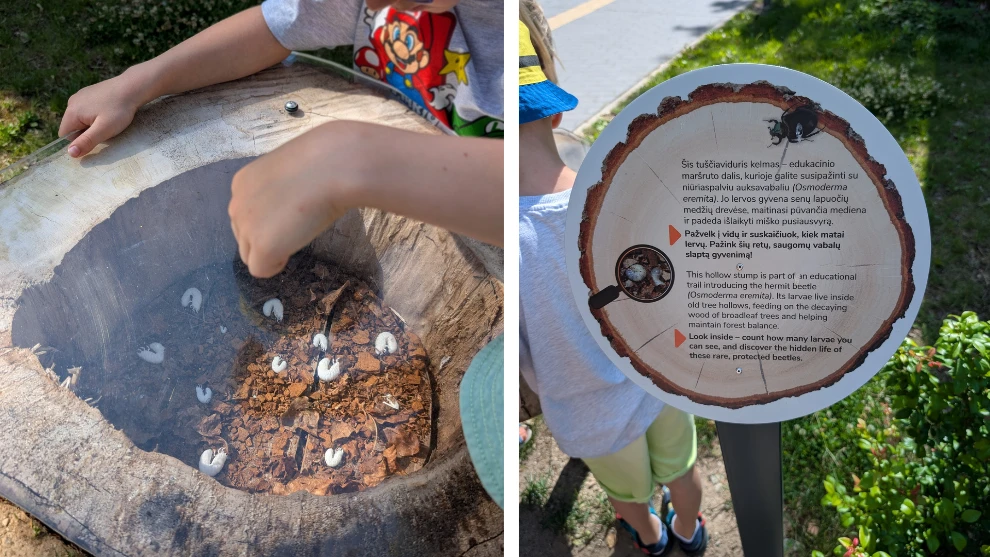
Hermit beetle larvae spend most of their life inside old, hollow deciduous trees, developing in decaying wood. For most people, seeing them in that environment would be extremely difficult.
A physical model makes it possible to bring this normally hidden part of the beetle’s life into an educational space without disturbing the animals or their natural habitat.
In early September, the Lithuanian Zoo also opened a new interactive educational installation: a large oak tree that visitors can enter to explore the full life cycle of the hermit beetle and see its different developmental stages.
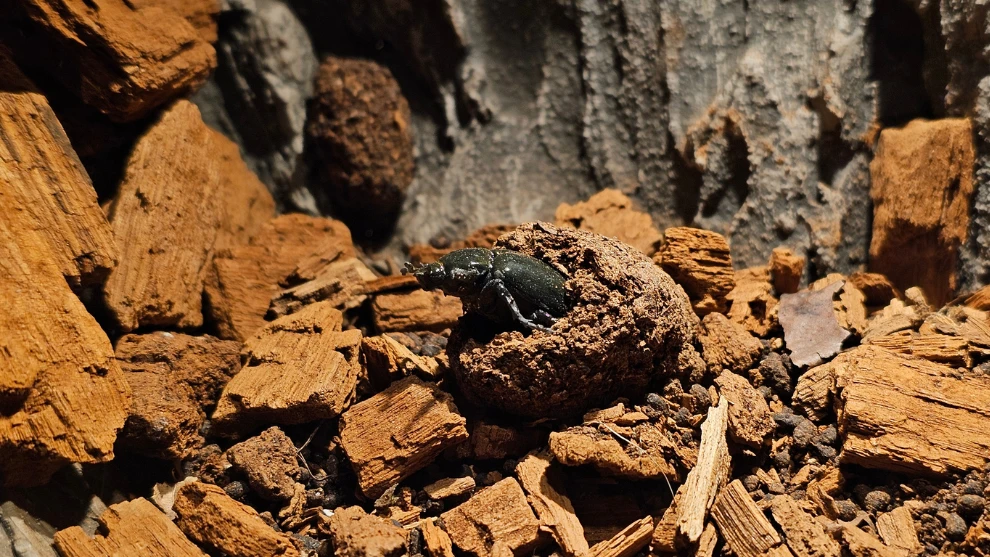
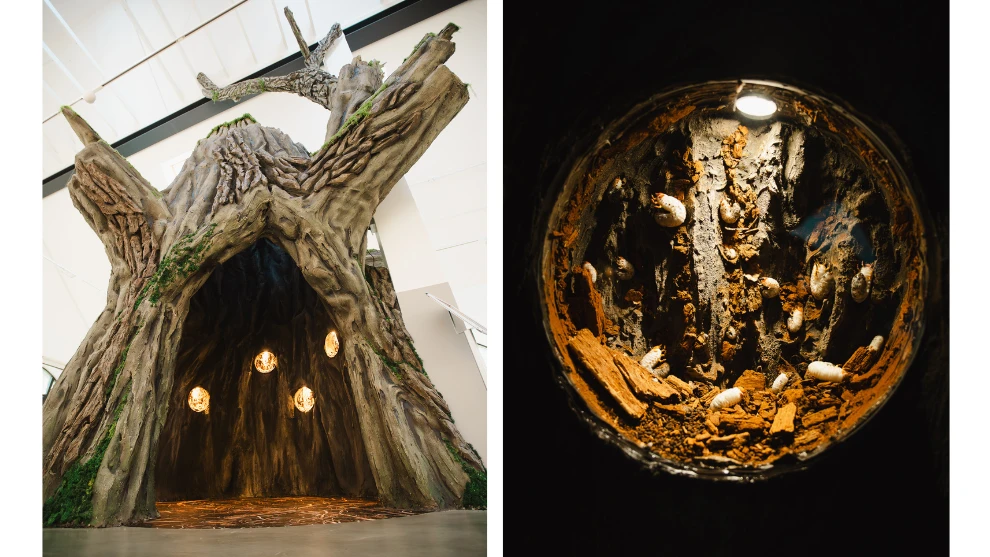
“Physical animal models are very important in our educational programs. When we teach children about rare, protected, or already extinct animals, we want to do more than simply tell them about the animals or show them pictures. We want to give them an opportunity to hold realistic models in their hands, touch them, examine the details, and get to know the animals more closely. Being able to physically interact with an object creates a much more vivid and engaging learning experience,” says Rasa Kirkaitė, Educational Programs Coordinator at the Lithuanian Zoo.
A Small Beetle With a Much Bigger Story
The hermit beetle itself may be small and rarely seen, but it opens the door to much broader subjects.
Learning about its life cycle also means learning about the importance of old trees, the habitats they provide, biodiversity, and why the survival of some species depends on active conservation efforts.
For us, that is one of the most interesting parts of this project. 3D printing did not replace the real animal, but it made it much easier to explore the beetle in an educational setting. And it shows how the usefulness of a 3D printed object depends less on the industry it belongs to and more on the problem it solves.
3D Printing Beyond the Usual Applications
“People most often associate 3D printing with prototypes, functional parts, or gaming miniatures. The hermit beetle models are one example of how the same technology can be used for nature education and other learning experiences. We are glad to contribute to this initiative by the Lithuanian Zoo and, at the same time, show just how many different applications are possible with a technology we have spent many years developing materials for,” says Andrius Darulis, Co-Founder of AmeraLabs.