
Client Spotlight: Dragon’s Ale Minis

Co-founder at AmeraLabs
Introduction
Isaac Cothern, the person behind Dragon’s Ale Minis, spends his working hours as a Data Migration Specialist. The miniature printing came later, after someone asked if he could do it. He only had FDM printers at the time, so he said no, bought a resin printer, and figured it out. When the same customers came back asking if he could paint the prints too, the answer was the same: no, but I’ll learn. Selling prints came later still, once output started running ahead of what the hobby budget could cover. It was a way to keep printing, not a plan to start a business.
After doing his own research on resins, Isaac settled on AmeraLabs TGM-7. The reason was simple: selling miniatures that might break in the customer’s hands is a bad experience for everyone. TGM-7 took that worry off the table.
We asked Dragon’s Ale Minis about the journey, a few prints worth talking about, and how they set up their workspace.
The Interview
How did Dragon’s Ale Minis get started? Was there a particular moment that made you think, “I’m going to bring these miniatures to life”?
I started printing minis after being asked if I could print minis. I only had FDM printers at the time so I said no, but I’ll try and learn how. So I bought a resin printer and started printing minis! The same goes for painting. I started printing minis for people and then they asked if I could paint them. I said no, but I’ll try and learn how. Eventually I was printing faster than I could afford materials, that’s when I started selling prints, just to keep the hobby alive! The rest is history!
Out of all the miniatures you’ve printed, which one made you stop and say, “Wow, I actually made that?” Any wild stories behind it?
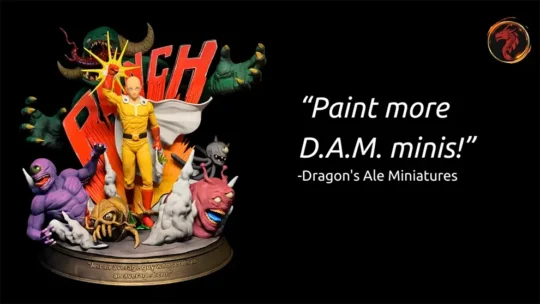
My proudest print was actually a scale figure. The challenge was that I requested the model from a designer but didn’t receive the files until 4 days before the convention I wanted to debut the model at. With one Resin Printer and my two FDM Printers I managed to print and paint the model in time. I assembled the completed model the night before the convention. It was late and storming, tornado sirens started going off while the glue was setting! Suddenly, I noticed that I had painted the lighting of one hand upside down, so I had to repaint the hand before reattaching it! We sold the model by noon the next morning.
What’s the trickiest miniature you’ve ever printed, and how did you solve it?
The toughest Miniature I’ve printed was a large Dragon. The project is still ongoing, so much work went into the printing of the model that I am painting it at a comfortable pace.
There are lots of resins out there. What made you pick AmeraLabs, and what difference has it made in your prints?
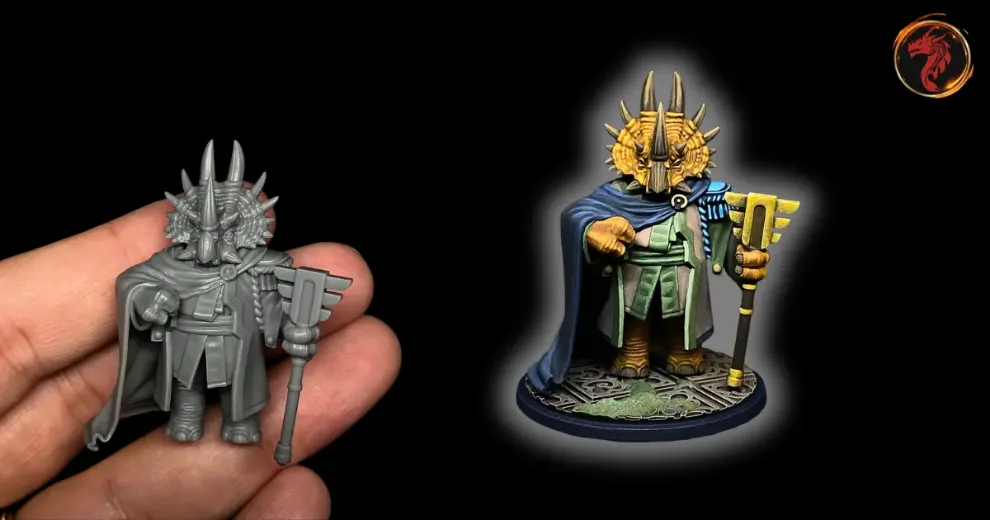
I did extensive research on my own to try and find the right resin for me. For miniatures, everything pointed towards TGM-7. At the time, I was running on a pretty strict budget and was mainly working on larger prints, so I didn’t even have the time to test it had I purchased. Once I had the time, I tried it out and it was obviously better than anything else I had used to this point. It’s very satisfying to paint models that I don’t have to worry about breaking and it’s even better to sell them without having to warn the customer that they are extremely fragile.
What’s your printing setup like? Any tools, tricks, or workarounds that make your life easier, and could help other creators?
I use plant enclosures to ventilate my work space. I have a smaller enclosure inside of the walk-in so that it can be sealed and heated, while the rest of the space is still vented. This makes working with TGM-7 like a dream, because I have a heater inside of the printer and an external heater in the small enclosure. I can keep the resin around 26° without a belt heater.
Do you have a personal favorite miniature or character you’ve printed that has a special story behind it?
I printed a large snail for my wife to paint and it is still my favorite mini in my collection!
If you had unlimited time and resources, what’s the ultimate miniature project you’d create?
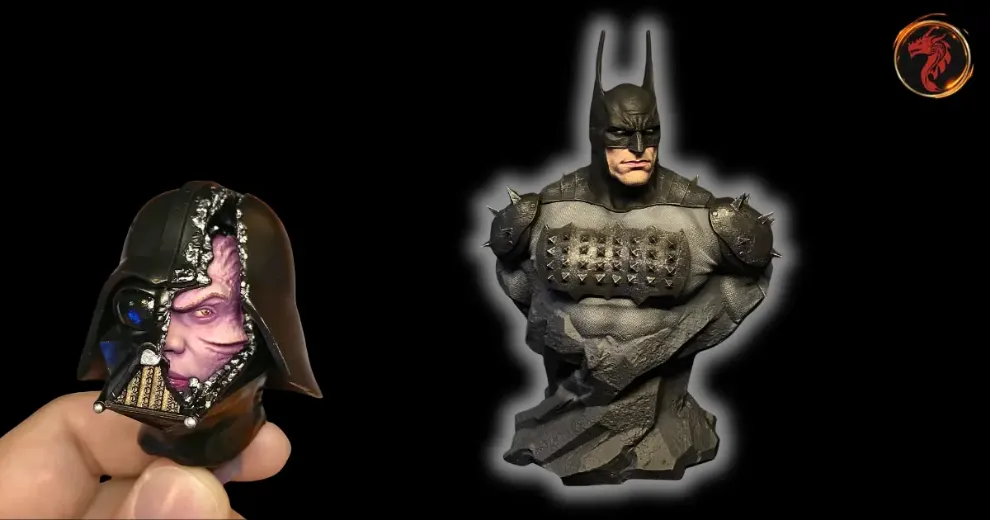
If I had unlimited time and resources, I would print and paint a line of miniature movie props and helmets as a collector’s set.
Conclusion
Isaac is a good reminder that you do not need a background in art or manufacturing to get into this. Dragon’s Ale Minis grew out of saying yes to things he had not done before and working it out from there.
On the material side, TGM-7 resin solved a real problem. Fragile prints and paying customers are a bad combination. Having a resin that holds up means one less thing to worry about on the selling side.
The large Dragon is still being painted, the snail still sits in the collection, and the movie props collector’s set is waiting for the right conditions. Plenty more to come from Dragon’s Ale Minis.
Huge thanks to Isaac Cothern of Dragon’s Ale Minis for sharing his story with us.
Follow Dragon’s Ale Minis on Instagram for updates on the ongoing Dragon build and whatever comes next.
Happy printing!