
Introduction
We formulate and manufacture 3D printing resin at AmeraLabs. We know what goes into photopolymer resin formulations, and we know Safety Data Sheets do not go deep enough to cover everything.
This guide covers 23 resin 3D printing safety myths using regulatory data, published research and manufacturer knowledge that most safety articles do not have. It explains what is actually dangerous, what is safe and how to protect yourself properly. Whether you are printing your first miniature on an MSLA printer or running a production shop with SLA and DLP machines, these facts will help you work safely.
Modern SLA, DLP and MSLA photopolymer resins consist of reactive acrylate monomers and oligomers that polymerize into solid polymers when exposed to <405 nm UV light, triggered by photoinitiators. Before that reaction is complete, these chemicals are hazardous to your skin, lungs and the environment.
The good news: resin printing is safe when you follow proper precautions.
The bad news: some commonly used shortcuts do not actually protect you.
Quick Safety Essentials
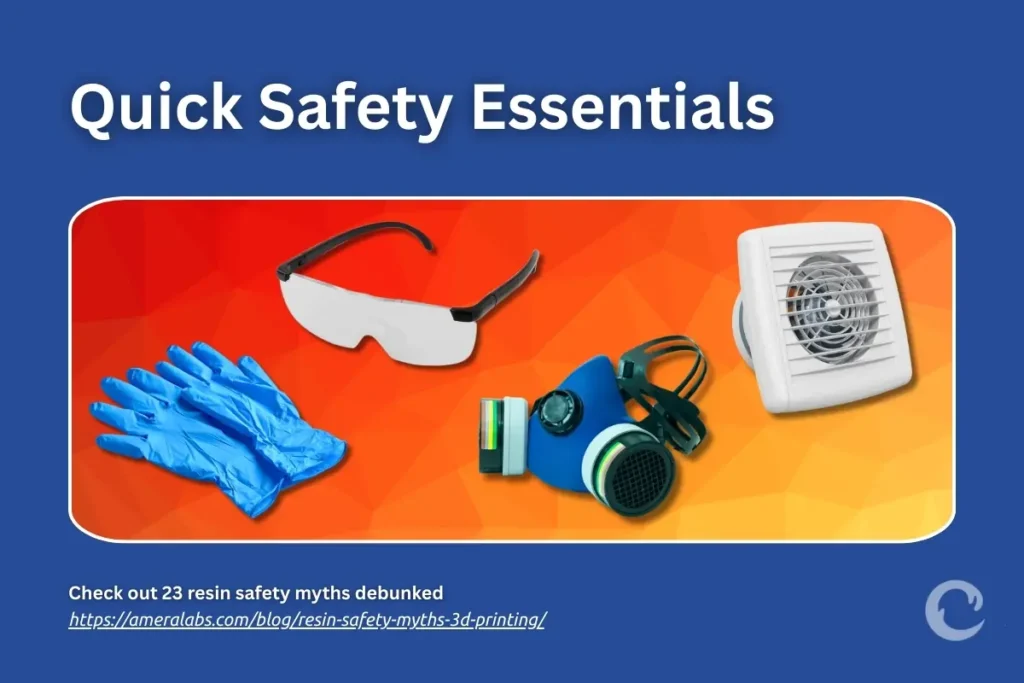
Follow these four non-negotiable rules at all times:
- Wear nitrile gloves (minimum 0.15 mm thickness) whenever handling uncured SLA, DLP or MSLA photopolymer resin, prints, tools or containers. Change gloves every 5 minutes (depends on resin formulation) during active resin contact. Lönnroth et al. (2003) found nitrile breakthrough begins at 3 minutes for MMA and 5 to 9 minutes for EGDMA and similar larger acrylates. Use 5 minutes as the maximum interval regardless of which monomers your resin contains.
- Wear safety glasses or a face shield at all times when handling resin. Resin splatter during support removal, pouring or cleaning can cause serious eye irritation or permanent sensitization. We have had occasions where eye protection prevented injury from resin droplets during support removal before washing.
- Wear an organic vapor respirator with appropriate cartridges (such as 3M 6001) during printing, cleaning and post-processing.
- Ventilate to outdoor air as the primary control. Aim for at least 6 air changes per hour. ANSI/ASSP Z9.5 (US) recommends 4 to 10 ACH for chemical workspaces. Common EU laboratory practice under COSHH/HSE guidance calls for 6 to 10 ACH. Use inline fans exhausting outdoors (80 to 150 CFM / 135 to 255 m³/h for a typical small room). Carbon filters are secondary only.
Advanced setups can maintain slight negative pressure: the exhaust fan removes more air than is supplied, so the room is at slightly lower pressure than surrounding areas. When a door or enclosure opens, air flows inward rather than fumes flowing out. This keeps contamination contained and protects adjacent spaces.
The Hidden Long-Term Cost of Acrylate Sensitization
Many safety guides miss this point. Once your immune system becomes sensitized to acrylate monomers, the allergy is usually permanent and cross-reactive.
You do not simply stop resin printing and return to normal. You may develop allergic contact dermatitis from many common products that contain the same or similar acrylates. These include:
- Acrylic and gel nail products (now the leading cause of acrylate allergy worldwide)
- Dental composites, bonding agents, provisional crowns and fillings (containing components such as HEMA, TEGDMA and Bis-GMA)
- UV-cured adhesives, paints, inks and fiberglass resins
- Certain medical devices, such as bone cement, wound dressings and glucose sensors
- Hair extensions and eyelash glues
- Furniture coatings
Clinical studies confirm strong cross-reactivity. Patients sensitized by one acrylate frequently react to many others on patch testing. A 2024 case report in Contact Dermatitis described a dental technician who developed allergic contact dermatitis from 3D printing resin and showed multiple positive reactions across the methacrylate series.
Sensitization is usually lifelong. Strict PPE from the very first print is the only reliable way to avoid it.
Resin Type and Cleanup Myths
Myth 1: Is Water-Washable Resin Safer Than Standard Resin?
The Myth
Water-washable resin must be safer because it uses water instead of harsh chemicals for cleanup.
Why People Believe It
The name suggests it is gentler and more environmentally friendly.
The Reality
Water-washable SLA resin contains the same hazardous acrylate monomers as standard resin. It just dissolves in water instead of IPA.
The EPA has issued a Significant New Use Rule (SNUR) for ACMO (4-Acryloylmorpholine) under TSCA. This regulatory action requires manufacturers to notify the EPA before certain new uses and mandates specific warnings on Safety Data Sheets because of risks of skin sensitization and specific target organ toxicity with repeated exposure. Many budget water-washable resins contain high concentrations of ACMO, and most do not label it correctly on their Safety Data Sheets. ECHA lists ACMO as Skin Sens. 1 and STOT RE 2.
The SNUR sets a surface water concentration limit for ACMO: releases must not result in estimated surface water concentrations exceeding 100 parts per billion (100 micrograms per liter). The threshold applies to estimated concentrations in the receiving water body, not the discharge itself, but the math is the same. One liter of 50% ACMO resin contains roughly 500 grams of the compound. Reaching that 100 ppb surface water threshold requires approximately 5 million liters of dilution water, about two Olympic swimming pools. Pouring ACMO-contaminated wash water down the drain is not a disposal option.
Multiple manufacturers’ own Safety Data Sheets classify their water-washable resins as “Environmentally Hazardous Substance” that is “toxic to aquatic life with long lasting effects.”
What to Do Instead
- Treat water-washable resin with the same precautions as any photopolymer resin
- Never pour resin-contaminated water down the drain
- UV-cure contaminated wash water until resin solidifies, then dispose of solids properly
- Wear gloves and respirator regardless of resin type
- Check the Safety Data Sheet (SDS) for specific hazards
Bottom Line: Water-washable means convenient cleanup, not reduced toxicity.
Myth 2: Are Bio-Based and Plant-Based Resins Non-Toxic?
The Myth
Resin made from plants or marketed as “eco-friendly” must be safer for your health.
Why People Believe It
“Plant-based” and “bio-based” sound natural and gentle.
The Reality
These resins undergo heavy chemical modification and still contain hazardous components.
Chemical analysis shows the reality. Commonly available plant-based resins contain substantial amounts of epoxidized soybean oil oligomer (a skin irritant) alongside standard resin chemicals including isooctyl acrylate (respiratory toxicity), photoinitiators (organ toxicity) and other hazardous compounds.
Liqcreate, a resin manufacturer, stated in published content on their website: “Creating a resin without hazards is kind of impossible. Our suppliers for raw materials are not yet able to produce raw materials without any health hazards.”
The real danger of bio-based resins is not that they are more toxic. It is that the marketing actively misleads users into skipping PPE. Labels like “eco-friendly,” “biodegradable” and “plant-based” signal safety to most people. The SDS tells a different story than the front of the bottle.
What to Do Instead
- Treat bio-based resins with the same resin 3D printing safety precautions as any resin
- Do not skip PPE because packaging says “eco-friendly”
- Check the SDS for the specific resin you are using
- Focus on proper ventilation and skin protection
- Dispose of bio-based resin waste following hazardous material procedures
Bottom Line: “Plant-based” is a marketing term, not a safety certification.
Myth 3: Is IPA Safe to Handle Without Precautions?
The Myth
IPA is common rubbing alcohol, so it is safe to handle casually.
Why People Believe It
It is available at stores and widely used in households.
The Reality
Concentrated IPA has a flash point of 12 °C and ignites easily from sparks or flames. Vapors are heavier than air and accumulate near the floor. Poor ventilation causes headaches, dizziness and irritation. The EU occupational exposure limit is 200 ppm (Directive 2017/164). The US OSHA PEL is 400 ppm. The NIOSH Pocket Guide to Chemical Hazards provides additional exposure limits and health hazard data.
What to Do Instead
- Use IPA only in well-ventilated areas, away from ignition sources
- Ground containers to avoid static discharge
- Store in approved flammable liquid containers
- Never use near heat sources or while smoking
- Wear nitrile gloves and organic vapor respirator when handling IPA-contaminated materials
Bottom Line: Concentrated IPA is a fire hazard and requires proper ventilation and PPE.
Personal Protective Equipment Myths
Myth 4: Is Wearing Nitrile Gloves Optional?
The Myth
You can handle resin prints quickly without gloves if you wash your hands after.
Why People Believe It
They have gotten away with it before without immediate problems.
The Reality
Direct skin contact with uncured photopolymer resin causes sensitization. Your body builds up an immune response over time until it suddenly triggers severe allergic reactions.
One user shared their experience: “Figured ‘screw it’ I’ll handle it bare handed just this once. Got severe chemical burns from the uncured resin within hours.” A reaction this fast typically indicates prior sensitization from earlier exposures had already occurred.
Another admitted: “I never wear gloves and I have a small 3D printing business. The worst thing is biting your nails later that day.” This person is accumulating sensitization risk with every unprotected exposure.
The danger is cumulative. Each exposure increases your risk until your immune system starts attacking the resin chemicals, causing rashes, burns and permanent sensitivity.
What to Do Instead
- Wear nitrile gloves every single time you handle resin or prints
- Use minimum 0.15 mm thickness gloves
- Never touch uncured resin with bare skin, even briefly
- Keep gloves on until prints are fully cured and cleaned
- If resin touches your skin, wash immediately with soap and water (not IPA)
Bottom Line: Nitrile gloves are not optional. They are essential every time.
Myth 5: Do You Need to Replace Safety Gloves Often?
The Myth
Nitrile gloves last for hours as long as they have no visible tears.
Why People Believe It
The gloves look intact and feel protective. Many users wear the same pair for long sessions without noticing problems right away.
The Reality
Nitrile gloves provide only temporary protection. Some resin monomers permeate the material over time, even without visible damage. You cannot see or feel this happening, but low-level exposure still reaches your skin.
Permeation speed depends on the specific monomers and their concentrations in your resin. A 2003 study (Lönnroth et al.) on dental acrylates found small monomers like MMA broke through nitrile in under 3 minutes, while larger ones like EGDMA took 5 to 9 minutes. Tests used thinner medical gloves and pure compounds.
Most modern 3D printing resins avoid high levels of small, volatile monomers like MMA. They use larger multifunctional acrylates instead, which permeate much more slowly. Glove thickness matters: 0.15 to 0.20 mm gloves resist longer than the thinner ones in the studies. IPA during cleaning speeds up breakthrough.
Many Safety Data Sheets list monomers generically or hide details in proprietary blends. Trace fast-permeating compounds can still exist. The main risk is cumulative exposure over repeated sessions, leading to sudden sensitization.
What to Do Instead
- Check your resin’s Safety Data Sheet for listed monomers and concentrations
- If small monomers (MMA, HEMA or similar) appear at higher levels, or the formulation is unclear, change gloves every 5 to 10 minutes during active handling
- For typical consumer resins with mostly larger acrylates, change every 10 to 20 minutes or when gloves get contaminated
- Use at least 0.15 mm thickness (0.20 mm is better)
- For longer sessions, replace gloves more frequently rather than trying to extend wear time
- For heavy use, switch to 4H laminated barrier gloves for stronger protection
- Dispose of gloves right away. Never reuse contaminated pairs
Bottom Line: Nitrile gloves are temporary barriers. Safe wear time depends on your resin’s monomers listed in the SDS. Change them regularly to avoid sensitization.

Myth 6: Is a Face Mask or N95 Enough Protection?
The Myth
N95 respirators or surgical masks protect you from resin fumes.
Why People Believe It
These masks protect against airborne particles and dust, so they must work for resin. Bundled PPE makes this worse. A dust mask or carbon-lined mask in the box signals to most users that the manufacturer has covered their safety needs.
The Reality
N95 respirators and surgical masks block particles but provide zero protection against volatile organic compounds (VOCs), which are the primary airborne hazard from photopolymer resin.
Resin releases chemical vapors, not just particles. These vapors pass straight through N95 filters like they are not there.
What to Do Instead
Use an organic vapor (OV) respirator with the right cartridges:
- 3M 6001 Organic Vapor Cartridge (effective against methacrylate and similar acrylates)
- 3M 60926 Multi-Gas/P100 (adds particulate filtration for ultrafine particles)
- Half-facepiece respirators provide protection up to 10x the occupational exposure limit
- Full-facepiece respirators provide protection up to 50x the limit
Do not use: surgical masks, N95/KN95 respirators, dust masks or cloth masks.
Bottom Line: Only organic vapor respirators with appropriate cartridges protect against resin VOCs.
Myth 7: Is Washing with Water Enough After Skin Contact?
The Myth
If resin touches your skin, just rinse it off with water.
Why People Believe It
Water removes most substances, so it should clean resin.
The Reality
Water alone fails to remove resin residue effectively. The chemicals can continue to penetrate your skin during rinsing.
Most photopolymer monomers penetrate skin rapidly, and many components are lipophilic (fat-loving), which helps them bind to skin oils. Water-washable resins are an exception to the hydrophobic generalization, but the decontamination problem remains the same: your skin has natural oils that help resin penetrate, and plain water does not break this bond efficiently for either resin type.
What to Do Instead
- Wash immediately with soap and water for at least 15 to 20 minutes
- Scrub thoroughly with soap to break down the resin
- Repeat washing if skin still feels oily or sticky
- Never use IPA, acetone or other solvents on skin as they increase penetration
- Monitor the area for irritation and seek medical attention if needed
Bottom Line: Soap and water, scrubbed thoroughly for at least 15 to 20 minutes, is the only appropriate skin decontamination method.
Ventilation, Workspace and Enclosure Myths
Myth 8: Do Carbon Filters Stop All VOC Particles ?
The Myth
Printer enclosures with carbon filters completely purify the air.
Why People Believe It
Carbon filters are marketed as air purification systems.
The Reality
Carbon filters reduce some VOCs but saturate over time without warning. They do not capture everything. Sealed enclosures concentrate fumes, releasing a high dose when opened.
Carbon filters work through adsorption, where molecules stick to activated carbon. But they have finite capacity and lose effectiveness as they fill up. There is no visible indicator when they are saturated. Temperature, humidity and chemical mixtures all affect filter performance.
What to Do Instead
- Prioritize exhaust to outdoor air as your primary control
- Use carbon filters as supplementary protection only
- Replace carbon filters based on usage, not just time. A high-volume setup can saturate a filter in weeks; occasional use may last longer. There is no visual indicator when saturation occurs, so err on the side of replacing early
- Never rely on carbon filters alone
Bottom Line: Carbon filters are supplementary only. Exhaust to outdoor air is the primary requirement.
Myth 9: Does the Printer’s Lid Keep Resin Fumes Contained?
The Myth
As long as the printer’s lid stays closed during printing, the fumes stay inside and the room air is safe to breathe.
Why People Believe It
The lid fits snugly and you cannot smell much while it is closed. If you cannot smell it, the fumes must be staying inside.
The Reality
This creates two separate problems.
First, printer lids do not seal airtight. VOCs escape through gaps around the lid, the build plate slot, cable pass-throughs and any venting holes in the housing. The leak rate is slow enough that you may not notice the smell, but VOC concentrations in the room still rise throughout a multi-hour print. You are breathing contaminated air for the entire print duration without realizing it.
Second, the lid traps and concentrates whatever does not escape. When you open the lid after a print, you release hours of accumulated VOCs in a single burst directly into your breathing zone. The concentration in that initial plume is far higher than anything you would inhale during the print itself. This is the moment of highest acute exposure in the entire workflow, and most people do it without a respirator because they think the print is done and the dangerous part is over.
The combination is the worst of both worlds: slow chronic exposure during printing, then a high-concentration spike at lid opening.
What to Do Instead
- Never assume the lid makes room air safe. Wear your respirator whenever the printer is running, not just when handling resin
- Connect the printer or its enclosure to outdoor exhaust ventilation so VOCs are removed continuously during printing
- Put your respirator on before opening the lid, every time
- After opening, wait for the exhaust system to clear the concentrated plume before leaning in to remove the build plate
- Use local exhaust ventilation (LEV) positioned near the printer to capture emissions at the source
Bottom Line: The printer lid does not protect you. It leaks during printing and concentrates fumes for release when opened. Ventilate the room and wear your respirator the entire time the printer is running.
Myth 10: Is It Okay to Use Your Printing Space for Other Things?
The Myth
The room looks clean between prints, so it is safe to use for storage or other activities.
Why People Believe It
No visible contamination equals safe to use.
The Reality
Resin vapors linger in porous materials. Residue contaminates surfaces and transfers to other items. A 2025 scoping review of 47 studies on desktop 3D printer VOC emissions (Baguley et al., Journal of Exposure Science & Environmental Epidemiology, doi:10.1038/s41370-025-00778-y) confirmed that VOC concentrations remain elevated for hours after printing ends, with slow-decaying compounds persisting well beyond print completion. Väisänen et al. (Journal of Toxicology and Environmental Health, 2022, doi:10.1080/15287394.2021.1998814) tracked VOC emissions from cured parts for 84 days, finding measurable off-gassing continued throughout, with sensitizing acrylates and formaldehyde among the emitted compounds.
Cross-contamination is a real risk. Items stored in printing areas can absorb chemicals and transfer them to other spaces. This is especially concerning for clothing, fabrics and anything that contacts food or skin.
What to Do Instead
- Dedicate the space exclusively to printing
- Never use the printing area for food, clothing or children’s items
- Do not store personal belongings in the print space
- Use separate storage for resin supplies and finished prints
- Keep the door closed when not actively printing
Bottom Line: Printing spaces must be dedicated only to printing. No mixed use.
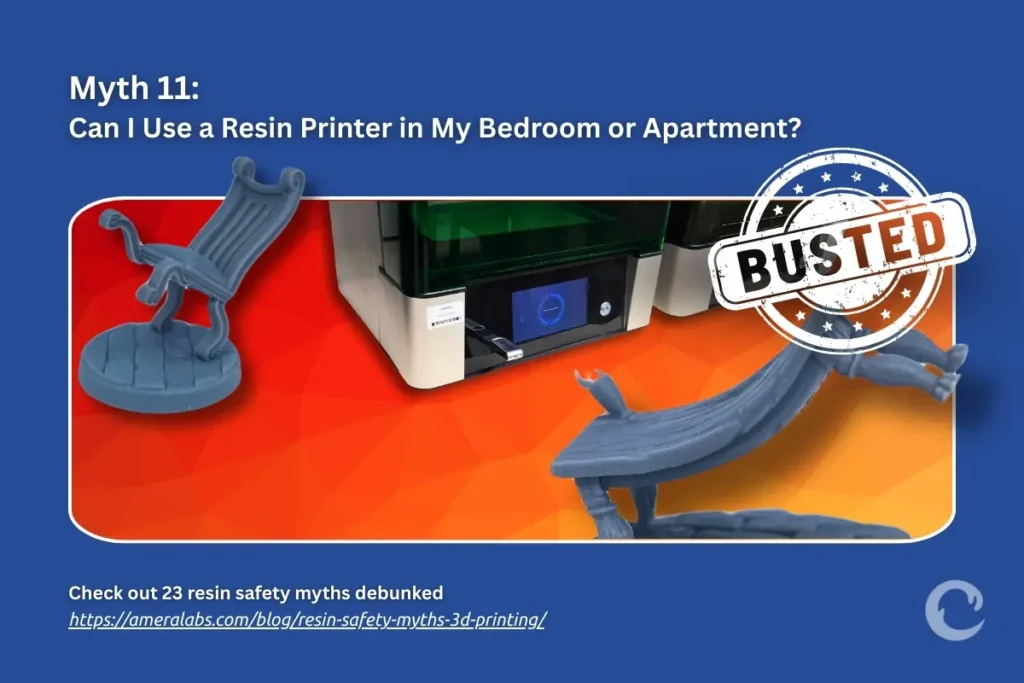
Myth 11: Can I Use a Resin Printer in My Bedroom or Apartment?
The Myth
Small living spaces force printing in bedrooms, and it should be fine with precautions.
Why People Believe It
Space constraints seem to make it necessary.
The Reality
Without outdoor exhaust, fumes accumulate during and after printing. A Chemical Insights Research Institute study (2021) found that the resin 3D printing room at a university dental school had the highest total VOC levels of any area measured, including formaldehyde and acetaldehyde (formaldehyde is IARC Group 1; acetaldehyde is currently IARC Group 2B and was designated a high-priority agent for re-evaluation during 2025 to 2029 by IARC’s Advisory Group (AGP Report 2025-2029, monographs.iarc.who.int) plus 29 other chemicals classified as irritants, sensitizers and developmental toxicants. A separate peer-reviewed study (Zhang et al., ACS Chemical Health & Safety, 2022, doi:10.1021/acs.chas.2c00002) measured formaldehyde in SLA printing environments exceeding the WHO indoor air quality guideline of 0.1 mg/m³.
What to Do Instead
- Avoid printing in bedrooms, kitchens or primary living spaces
- Use a vented enclosure exhausting to outdoor air
- Consider a balcony or garage setup if outdoor venting is possible
- If no outdoor ventilation is available, seriously reconsider resin printing in that space
- Never print where you sleep or spend extended periods
Bottom Line: Resin printing in living spaces without outdoor exhaust is a serious health risk.
Exposure and Daily Handling Myths
Myth 12: If the Resin Does Not Smell Strong, Is It Less Toxic?
The Myth
Strong odor means dangerous chemicals. No smell means safer resin.
Why People Believe It
Our noses detect many chemical hazards, so lack of odor feels safe.
The Reality
Resin fumes can be completely undetectable by smell while still being toxic. The chemicals that create noticeable odor may be different from the ones that can damage your lungs or cause sensitization. Low-odor resins reduce or mask the scent through added fragrances or chemical reformulation, but many of the most hazardous components, including certain acrylates and photoinitiators, have minimal natural odor at typical exposure levels.
What to Do Instead
- Never use smell as a safety indicator
- Always ventilate your printing area, regardless of odor
- Wear an organic vapor respirator (not just a dust mask)
- Read the SDS to understand the actual chemicals in your resin. Odor gives no indication of what is present
Bottom Line: Your nose cannot protect you from resin VOCs.
Myth 13: Is Quickly Running to the Print Room Without PPE Safe?
The Myth
Brief exposure to grab a print or check on progress is harmless.
Why People Believe It
Months without problems feels like proof. It is not. That is exactly how acrylate sensitization works. Each exposure silently reduces the threshold until the reaction appears suddenly and permanently.
The Reality
Sensitization builds from small repeated doses. These “quick trips” accumulate exposure. Symptoms appear suddenly after cumulative exposure crosses a threshold.
One user shared on r/resinprinting: “I thought quick checks without my respirator were fine. After six months, I developed sudden severe respiratory symptoms. My doctor confirmed it was chemical sensitization. Now I can’t be in the same room as a printer.”
The immune system has memory. Each unprotected exposure is recorded. One day the accumulated exposure may trigger a reaction, and you can become permanently sensitized.
What to Do Instead
- Put on full PPE before entering the print area
- No exceptions for “quick checks”
- Set up remote monitoring (cameras) to avoid unnecessary entries
- Plan your printing sessions to minimize entries
- Accept that proper safety takes a few extra seconds
Bottom Line: No safe brief exposure exists. Every unprotected moment adds to sensitization risk.
Myth 14: Are Uncured Resin Prints Safe to Touch?
The Myth
Once the print comes out of the printer, it is solid and safe to handle.
Why People Believe It
The print looks and feels solid.
The Reality
Uncured residue remains reactive and transfers to skin. The surface may feel dry while liquid resin remains in details, hollows and between layers. Even after thorough washing in IPA, reactive monomers can remain on the surface and inside details until fully post-cured.
Fresh prints from any MSLA, DLP or SLA printer are covered in uncured resin. The printer vat liquid sticks to every surface. Handling prints without gloves means direct skin contact with liquid chemicals, even if you do not see wetness.
What to Do Instead
- Wear gloves until prints are fully cleaned, post-cured, non-tacky, hard and free of wet patches
- Assume all prints are contaminated until fully processed
- Never hand uncured prints to others without warning
- Wash prints in IPA thoroughly before post-curing
- See the cure verification guidance in the Quick Safety Checklist section below
Bottom Line: Prints are not safe to touch until they meet all criteria for full cure.
Post-Processing, Curing and Use Myths
Myth 15: Can I Use Sunlight Instead of a UV Cure Station?
The Myth
Sunlight works just as well as a UV cure station and is free.
Why People Believe It
Sunlight contains UV radiation and does visibly harden uncured resin.
The Reality
Sunlight UV intensity varies dramatically by latitude, season, time of day, cloud cover and whether the print is behind glass. Standard window glass transmits UV-A but blocks most UV-B, and the actual intensity reaching your print is unknown and variable. A print cured for 10 minutes in direct midday summer sun at the equator receives a completely different UV dose than one left on a windowsill in northern Europe in winter. There is no way to know how much UV your print actually received.
Consumer cure stations deliver a controlled dose at <405 nm, the wavelength matched to your resin’s photoinitiators, at consistent intensity. Research on photopolymer cure behavior shows that mechanical properties plateau once sufficient UV energy (dose, measured in mJ/cm²) has been delivered. Flux (intensity, mW/cm²) and exposure time both matter. Sunlight provides unpredictable flux across a broad spectrum with no way to measure the accumulated dose. Parts cured in sunlight are frequently under-cured in ways the user cannot detect with a visual check, retaining higher levels of unreacted monomers than properly cured parts and increasing the risk of sensitization during handling.
What to Do Instead
- Use a dedicated <405 nm UV cure station
- Follow manufacturer time and temperature protocols for your specific resin
- Never rely on curing through a window. Standard window glass transmits significant UV-A (315 to 400 nm), which is the range your photoinitiators respond to, but the intensity is uncontrolled and unmeasurable, so you cannot determine the actual dose your print received
- If a cure station is not available, understand that sunlight curing is a compromise with unknown cure quality
- Budget <405 nm cure stations are available for under 30 euros and provide consistent, repeatable results
Bottom Line: Sunlight curing is unreliable and unquantifiable. A cure station is recommended equipment.
Myth 16: Does Skipping Post-Cure Keep Miniatures Flexible for Safer Support Removal and Shipping?
The Myth
Uncured or partially-cured prints are more flexible, making them less likely to break during support removal or shipping to customers.
Why People Believe It
The flexibility seems like a practical advantage for handling delicate parts.
The Reality
Uncured resin transfers to customers’ skin. No warnings or PPE are provided with the product.
This is an ethical and potentially legal liability issue. When you ship uncured prints: customers handle them without gloves, children touch them and put fingers in mouths, no safety data sheets or warnings are included, and you are transferring chemical exposure risk to uninformed people.
Medical literature documents cases of permanent chemical sensitization from photopolymer resin acrylates, including in people who handled printed objects without knowing the resin was incompletely cured. Once sensitized, a person reacts to trace exposures for the rest of their life. When you ship an uncured print, you are transferring that risk to someone who has no SDS, no gloves and no reason to suspect the object in their hands is a hazardous material.
Uncured resin is a hazardous material. Shipping it as a finished product without disclosure violates consumer protection principles. Depending on free liquid content and jurisdiction, it may also trigger hazardous materials shipping requirements, but the ethical problem stands regardless of the regulatory classification.
What to Do Instead
- Always fully post-cure before shipping or selling
- Verify cure: print is hard everywhere including recesses, surface is non-tacky with no wet or glossy patches, and the print was washed in IPA before post-curing
- Adjust support placement and orientation instead of relying on flexibility
- Use better packaging (bubble wrap, padding) to protect brittle parts
- Consider partial curing during support removal, then full curing afterward
- Never ship products you would not let your own children handle bare-handed
- Use a resin specifically formulated to retain flexibility after full cure, such as TGM-7 for miniatures or FLX-300 for rubber-like parts
Bottom Line: Selling or shipping uncured prints is unethical and potentially illegal. Post-cure is mandatory for any item leaving your workspace.
Myth 17: Are Cured Resin Prints Completely Safe and Food-Safe?
The Myth
Once properly cured, resin prints become inert plastic that is safe for food contact.
Why People Believe It
The curing process seems to convert the resin into stable plastic.
The Reality
Once properly cured, resin prints are much more stable, but they are not completely inert. Layer lines create microscopic channels that trap bacteria and are nearly impossible to fully sanitize. Unreacted monomers can still leach from the surface over time, and the printing process itself can introduce contamination that standard post-curing does not fully eliminate.
As of late 2025, one photopolymer resin exists with legitimate food-contact regulatory backing: Loctite 3D IND3785 Low Migration, which holds EU Regulation 10/2011 approval and declares compliance with FDA 21 CFR 177.1010. But the practical scope is narrow. It is validated exclusively for industrial Stratasys Origin printers, covers only short-term food contact (think processing fixtures and dispensing equipment, not cups or utensils), and requires strict adherence to a multi-step validated workflow including specific post-cure washing steps. Outside of those conditions, the approval does not apply. No desktop photopolymer resin has received equivalent clearance.
For a deeper look at the food safety question and safer alternatives, see our 3D printed cookie cutters guide.
What to Do Instead
- Never use resin prints for food contact
- This includes cups, plates, utensils, cookie cutters or food molds
- If you must use resin for food applications, coat with an FDA-compliant or EU Regulation 10/2011-compliant food-safe epoxy
- Disclose the material to anyone who will use the item
- Consider alternative materials such as silicone molds or PETG filament for food applications. Details in our 3D printed cookie cutters guide
Bottom Line: No resin prints are food-safe, regardless of claims.
Myth 18: Can Tools Used for Printing and Post-Processing Be Used Elsewhere?
The Myth
After washing, tools are clean enough to use for other purposes.
Why People Believe It
The tools look clean and do not smell like resin.
The Reality
Resin residue persists in scratches, pores and tool surfaces. Cross-contamination is invisible but real.
Even small amounts of transferred resin can cause sensitization. Using contaminated tools for food prep, woodworking or general household tasks spreads chemical exposure to unexpected areas.
What to Do Instead
- Dedicate tools exclusively to resin work
- Mark them clearly with permanent marker or colored tape
- Store resin tools separately from other tools
- Never use resin spatulas, containers or brushes for food
- Dispose of tools when they become heavily contaminated
Bottom Line: Once a tool touches resin, it is a resin-only tool forever.
Myth 19: Are Post-Cured Resin Parts Safe for Long-Term Skin Contact?
The Myth
Once properly post-cured, resin parts are completely inert and safe for extended skin contact.
Why People Believe It
The curing process is complete, so the part must be safe.
The Reality
Trace residues can irritate with prolonged contact in some users. Not everyone reacts, but individual sensitivity varies.
While proper post-curing significantly reduces risk, some people develop contact dermatitis from wearing resin jewelry or using resin-handled tools for extended periods.
What to Do Instead
- Limit extended skin contact for items like jewelry, watch bands or tool handles
- Use skin-safe certified resins
- Test personally before selling items meant for prolonged wear
- Consider coating with clear epoxy or polyurethane for skin-contact items
- Warn customers about potential sensitivity
- Provide care instructions for proper cleaning
Bottom Line: Post-cured parts are generally safe for brief contact. Brief handling does not carry the same sensitization risk as handling uncured resin, because reactive monomers are largely polymerized. However, individual sensitivity varies, so limit extended wear until personal tolerance is confirmed.
Long-Term Health and Special Situations
Myth 20: Does 3D Printer Resin Cause Cancer?
The Myth
Many search for direct cancer links due to SDS warnings and concerning chemical names.
Why People Believe It
Safety Data Sheets list “suspected carcinogen” warnings for some components.
The Reality
Some resin components (TPO for example) release formaldehyde and acetaldehyde (formaldehyde is IARC Group 1; acetaldehyde is IARC Group 2B and has been designated a high priority for re-evaluation during 2025 to 2029) during printing and post-processing. As covered in Myth 11, the Chemical Insights Research Institute dental school study (2021) measured both in resin printing environments. Zhang et al. (ACS Chemical Health & Safety, 2022, doi:10.1021/acs.chas.2c00002) also measured formaldehyde in SLA printing environments exceeding the WHO indoor air quality guideline of 0.1 mg/m³.
However, risk depends on exposure level and duration. Proper ventilation and PPE minimize exposure significantly. No long-term epidemiological studies exist specifically on hobbyist resin printing because the technology is relatively new (widespread hobby use only began around 2018 to 2020).
What the lack of studies means: we do not have 20 to 30 year data on health outcomes. But we do know the chemicals involved have documented health risks, unprotected exposure creates measurable VOC concentrations, similar chemical exposures in other industries require protective equipment, and dental professionals using similar resins follow strict safety protocols.
What to Do Instead
- Minimize exposure through exhaust ventilation to outdoor air
- Wear organic vapor respirators during all resin handling
- Do not print in living spaces where you spend most of your time
- Choose resins from manufacturers who provide complete SDS documentation
- Follow proper safety practices consistently
- The goal is minimized exposure, not zero, which is impossible
Bottom Line: There are no definitive long-term cancer studies, but the chemicals involved warrant serious precautions. Your risk from proper safety practices is likely very low. Your risk from years of unprotected exposure is unknown but potentially significant.
Myth 21: Are Pets and Children Safe Around a Resin Printer?
The Myth
The printing room is fine for pets and children between print sessions since there is no visible mess.
Why People Believe It
The space looks clean and the resin is contained.
The Reality
Pets groom themselves constantly. A cat that walks across a contaminated surface ingests whatever is on its paws. Dogs sniff everything and lick surfaces. Both can pick up uncured resin residue from workbenches, floors and tools. Children touch surfaces and put their hands in their mouths. The sensitization pathway is the same for animals as for humans, and children face higher risk per unit of exposure because of their lower body weight and developing immune systems.
Cross-contamination from surfaces, tools and residue is invisible. VOCs also continue off-gassing after printing ends, accumulating in the space for hours.
What to Do Instead
- Keep pets and children out of the print space entirely, not just during active printing
- Never let pets walk on workbenches or surfaces where resin is handled
- Wash your hands and change your clothes before handling children or pets after a print session
- Store all resin, tools and prints in sealed containers out of reach
- Treat the print room as a chemical workspace at all times, not just when the printer is running
Bottom Line: The print room is a chemical workspace. Children and pets do not belong in it.
Myth 22: Is Resin Printing Safe During Pregnancy?
The Myth
With proper PPE, resin printing carries the same risk during pregnancy as at any other time.
Why People Believe It
PPE reduces exposure, and the assumption is that what is safe for a healthy adult is safe during pregnancy.
The Reality
Several acrylate and methacrylate monomers commonly found in photopolymer resins, including THFA, TCDDA and OPPEOA, are listed as suspected or potential reproductive and developmental toxicants by regulatory agencies, based primarily on animal data. No conclusive human studies exist. The Chemical Insights Research Institute study (2021) specifically identified developmental toxicants among the 29 chemicals measured in resin printing emissions.
No long-term studies exist on the specific risks to fetal development from resin printing exposure, because the technology is too new and such studies are ethically difficult to conduct. The standard principle in toxicology is that developing fetuses face potentially higher risk from chemical exposures than healthy adults. Concentrations that are tolerable for adults can have disproportionate effects during critical developmental windows, particularly the first trimester.
What to Do Instead
- Consult your doctor before continuing resin printing during pregnancy
- If printing continues, maximize all existing controls: dedicated outdoor exhaust ventilation, fresh organic vapor respirator cartridges changed on schedule, full nitrile glove changes every 5 minutes (depends on resin formulation)
- Consider pausing resin printing during the first trimester when developmental risk is highest
- Have someone else handle resin and post-processing tasks if possible
- Check the SDS for your specific resin and discuss the listed chemicals with your doctor
Bottom Line: Pregnancy warrants extra caution beyond standard PPE. The chemicals involved include known reproductive and developmental toxicants. Talk to your doctor.
Waste Disposal Myth
Myth 23: Can I Just Pour Resin Waste Down the Drain or Throw It in Regular Trash?
The Myth
Once cured or diluted, resin waste is harmless household trash.
Why People Believe It
Cured resin looks like plastic, diluted IPA looks like water, and everything solid goes in the bin.
The Reality
Uncured liquid photopolymer resin, contaminated IPA, failed prints with uncured residue and heavily contaminated gloves are classified as hazardous waste under both US EPA regulations and the EU Waste Framework Directive (2008/98/EC). Simply curing resin with UV first renders solids generally non-hazardous for regular trash in small quantities, but local rules vary by municipality. Pouring any liquid resin or uncured-contaminated solvent down drains violates environmental regulations in virtually every jurisdiction.
Cured prints and supports that are fully hard and non-tacky are generally safe for regular household waste in small quantities. Uncured or partially cured prints, failed prints that are still sticky, and supports with residual uncured resin must be fully UV-cured before disposal. Contaminated IPA and wash water must never go down the drain.
What to Do Instead
- Collect all liquid waste (contaminated IPA, wash water, unused resin) in clear containers
- Cure fully in sunlight or under a UV station until all resin has solidified
- Dispose of fully cured solids as regular household waste after checking local limits
- Send contaminated solvents to hazardous waste collection
- Filter and reuse IPA until it becomes too cloudy, then dispose through hazardous waste channels
- Never pour liquid resin, contaminated IPA or resin-contaminated wash water down drains
- Never bury resin waste
Bottom Line: Cure first, then check local regulations. Never assume solid equals safe, and never pour anything down the drain.
Essential Equipment Guide
Respirators (Required)
| Use | Do Not Use | Why It Fails |
| 3M 6001 Organic Vapour Cartridge | N95/KN95 masks | No VOC protection |
| 3M 60926 Multi-Gas/P100 Cartridge | Surgical masks | No VOC protection |
| 3M 6200 Half-Facepiece Respirator (up to 10x OEL) | Dust masks | No VOC protection |
| 3M 6800 Full-Facepiece Respirator (up to 50x OEL) | Cloth masks | No protection at all |
Gloves (Required)
| Use | Do Not Use | Why It Fails |
| Nitrile gloves, 0.15 mm minimum thickness | Latex gloves | Poor chemical resistance |
| Change every 5 minutes during active resin contact (depends on resin formulation) | Vinyl gloves | Break down quickly |
| 4H laminated barrier gloves for extended sessions | Cotton gloves | Absorb resin |
| 0.20 mm nitrile for extra margin | Thin nitrile under 0.10 mm | Breakthrough too fast |
Eye Protection (Required)
Liquid resin splash into eyes causes chemical burns and potential permanent sensitization. Safety glasses or a face shield are not optional. Support removal and pouring are the highest-risk moments for splatter.
| Use | Do Not Use | Why It Fails |
| Safety glasses with side shields | Regular eyeglasses | No side protection |
| Face shield for pouring, mixing or support removal | No eye protection | Direct splash risk |
Ventilation (Required)
| Parameter | Requirement |
| Air changes per hour | 6 ACH minimum (ANSI/ASSP Z9.5 (US); COSHH/HSE (EU)) |
| Small room (9 m², 2.4 m ceiling) | 135 to 255 m³/h (80 to 150 CFM) |
| Professional setups | 340 to 815 m³/h (200 to 480 CFM) inline fans |
| Exhaust direction | To outdoor air, never recirculate |
| Pressure | Negative: exhaust more than supply so air flows inward when doors open |
| Do Not Use | Why It Fails |
| Carbon filters alone without exhaust | Saturate without warning, do not capture all VOCs |
| Sealed enclosures without outdoor venting | Concentrate fumes for release when opened |
| Air purifiers designed for dust/allergens | Not rated for chemical vapors |
| Opening windows without active exhaust fan | Relies on wind direction, inconsistent airflow |
Optional but Recommended
| Item | Purpose |
| Disposable aprons or dedicated printing clothes | Prevent resin transfer to personal clothing |
| Paper towels | Disposable cleanup |
| Separate trash bag | Contaminated material isolation |
| Ultrasonic cleaner | More thorough IPA washing |
| Remote camera monitoring | Print checks without entering the room |
Safety Checklist
Before you start printing:
- Ventilation system running and exhausting outdoors
- Fresh nitrile gloves available (multiple pairs)
- Organic vapor respirator with fresh cartridges
- Safety glasses or face shield ready
- Work area clear of food, drinks and non-printing items
- Pets and children out of the space
- IPA wash solution prepared in approved container
- Disposable materials ready (paper towels, waste bag)
During printing:
- Respirator on before opening resin bottle
- Gloves on before touching any resin-related items
- Safety glasses on
- Printer hood closed during printing
- No eating, drinking or smoking in print area
- Change gloves every 5 minutes (depends on resin formulation) during active handling
After printing:
- Keep respirator and gloves on while removing print
- Wash print in IPA before post-curing, then allow to dry completely before UV exposure
- Post-cure fully at <405 nm using a dedicated cure station, following manufacturer time and temperature protocols for your specific resin
- Wash hands thoroughly after removing gloves
- Seal resin bottle tightly
- Dispose of contaminated materials according to local regulations
When is a print safe to handle with bare hands?
No single test confirms full cure. The most reliable approach is to follow the manufacturer’s specific time and temperature protocol for your resin and cure station. Then confirm with these surface checks:
- Washed in IPA before post-curing and fully dried before UV exposure
- Surface is non-tacky and matte
- No wet or glossy patches anywhere on the surface
- Post-cured for the manufacturer’s recommended duration at <405 nm
Note: odor is not a reliable indicator of cure. Harmful monomers are largely odorless at typical exposure concentrations.
Frequently Asked Questions
What are the symptoms of acrylate sensitization from resin 3D printing?
Common early symptoms include redness, itching, burning or dry patches on skin that contacted uncured resin. It can progress to swelling, blisters, cracking skin or oozing sores. Respiratory symptoms such as persistent cough, wheezing, shortness of breath or throat irritation can occur when exposed to resin vapors. Symptoms can appear hours to days after contact and often get worse with each exposure. Once sensitized, even tiny amounts trigger a reaction. If you notice these signs, stop all contact and see a doctor.
How long do resin fumes and VOCs actually linger after printing stops?
VOCs released by acrylate monomers and photoinitiators can remain elevated for 2 to 24 hours after printing ends, with some cured parts off-gassing for days to weeks. Run your outdoor exhaust fan for at least 60 minutes post-print and always wear your organic vapor respirator when re-entering the room.
What should I do if I develop a rash or allergic reaction from resin?
Stop all contact immediately and wash the area thoroughly with soap and water. Seek medical advice promptly. This is typically sensitization to acrylate monomers and can become permanent. Document the incident, inform your doctor of the exact resin used, and adopt stricter PPE protocols going forward. Future exposure must be completely avoided.
Is it safe to sand, drill or polish cured resin prints?
Fully cured resin prints are far safer than uncured ones, but sanding creates fine polymer dust that can irritate lungs and eyes. Always wear a P100 or multi-gas respirator, safety glasses, and work outdoors or under strong local exhaust. Wet-sanding greatly reduces dust. The dust consists of already-polymerized acrylates and is much less reactive than liquid monomers.
How often should I replace organic vapor respirator cartridges when using resin?
Replace 3M 6001 or 60926 cartridges after 40 to 80 hours of heavy use. For daily printing, change them every two weeks. Cartridges lose effectiveness against acrylate vapors and photoinitiators without any noticeable warning.
How should I safely store unused photopolymer resin?
Keep bottles upright in their original containers, tightly sealed, in a cool (15 to 25 °C), completely dark place away from heat and sunlight. Most resins have a 12 to 24 month shelf life. Store separately from living areas, food and children or pets.
What should I do immediately if resin gets in my eyes or I accidentally ingest it?
Exact wording from AmeraLabs resin Safety Data Sheets:
Eye contact: Check for and remove any contact lenses. Immediately flush eyes with running water for at least 15 minutes, keeping eyelids open. Seek immediate medical attention/advice.
Ingestion: Get medical attention immediately. Call a physician. Remove dentures if any. Remove victim to fresh air and keep at rest in a position comfortable for breathing. Do not induce vomiting unless directed to do so by medical personnel. If vomiting occurs, the head should be kept low so that vomit does not enter the lungs. Chemical burns must be treated promptly by a physician. Give nothing by mouth. If unconscious, place in recovery position and get medical attention immediately. Maintain an open airway. Loosen tight clothing such as a collar, tie, belt or waistband.
Can I recycle or dispose of fully cured resin prints and supports in normal household waste?
Small quantities of fully cured (hard, non-tacky) polymer prints and supports can usually go in regular household trash after checking local rules. However, any prints that still feel sticky contain uncured monomers and must be fully UV-cured first. Never place uncured material in normal recycling or trash.
What happens if I become sensitized to acrylates from resin printing?
Sensitization is typically permanent. You may develop allergic reactions to acrylic and gel nails, certain dental materials, adhesives and other acrylate-containing products for life. Many people must avoid nail salons and specific dental procedures. This is why full PPE from your very first print is essential.
Conclusion
Resin 3D printing produces detail that is impossible with other methods. The technology works safely when you follow proper precautions.
The myths covered here show a consistent pattern: people underestimate cumulative exposure risks. They feel fine after unprotected exposure, so they assume it is safe. Then sensitization develops suddenly, often permanently.
From our experience manufacturing photopolymer resins, we see the chemistry involved. These are reactive chemicals designed to transform from liquid to solid through UV exposure. That reactivity makes them useful for SLA, DLP and MSLA 3D printing. It also makes them hazardous before they are fully cured.
The good news: proper safety equipment is affordable and effective.
The four non-negotiable safety rules:
- Always wear nitrile gloves when handling anything resin-related
- Always wear safety glasses or a face shield
- Always wear an organic vapor respirator when working with resin
- Always ventilate to outdoor air, not just filter and recirculate
Follow these rules and the specific precautions for each myth, and you can print safely for years.
Your lungs, skin and future options cannot be replaced. Gloves and respirators can.
Happy printing, stay safe, and never skip the basics.
AmeraLabs, March 2026
Related Resources
Awesome miniatures pictured in the illustrations from The Shattered Realms, The Printing Goes Ever On and The Dragon Trappers Lodge.
Just starting out with 3D printing? See our complete resin 3D printing settings guide for beginners.
Having print quality issues? Our resin 3D printing troubleshooting guide helps identify and fix common problems.
Want to understand material properties? Read about resin mechanical properties to choose the right resin for your project.
Setting up a professional or production environment? The Business Resin Printing Setup Guide & Checklist covers ventilation calculations, advanced PPE and workflow safety.
Printing miniatures or flexible parts? See our guides for TGM-7, AMD-3 and XVN-50 resins.
Concerned about using resin for food applications? Our 3D printed cookie cutters guide covers the food safety question in depth.
Concerned about post-cure yellowing? Read how to prevent white resin prints from yellowing.
All AmeraLabs resins come with complete safety documentation and technical specifications. Visit our shop to find the right resin for your needs.
For guidance on hazardous waste disposal, check your local municipal regulations. The EU Waste Framework Directive (2008/98/EC) and your national waste authority provide specific guidance. The EPA hazardous waste disposal guide is a US starting point.
The IARC complete list of carcinogen classifications is the authoritative reference for understanding Group 1, 2A and 2B designations mentioned throughout this post.
What Is New in This 2026 Update
- 23 myths reorganized in logical reader-flow order (buy, protect, print, handle, finish, health, waste)
- EU regulations primary with US equivalents throughout
- Acrylate sensitization section with cross-reactivity data
- Eye protection added as fourth non-negotiable rule
- Full disposal myth with EU Waste Framework Directive reference
- Exact SDS first-aid language for eye contact and ingestion
- Latest peer-reviewed data (Baguley et al. 2025)
- All study citations with journal names and DOIs
- 9 frequently asked questions with detailed answers
